Golfers across skill levels consistently seek avenues to enhance their gameplay, and a rescue club emerges as a valuable asset in this pursuit.
Rescue golf clubs are ingeniously crafted to come to your aid when you require added distance and precision from challenging positions, such as the rough or sand traps. As awareness grows regarding the advantageous edge they can provide on the course, these clubs have witnessed a surge in popularity.
But what precisely constitutes a rescue club, and what advantages does it bring to the table? Let’s delve deeper into the realm of these clubs to unveil their transformative impact on your golf game!
Golf Rescue Club: What You Need to Know
A hybrid golf club, often referred to as a rescue club, stands as a unique fusion of iron and wood characteristics within a single golfing tool. This innovative club emerged in the late 1990s to address the challenges golfers encountered while attempting long shots with traditional irons. Since its inception, the rescue club has gained widespread popularity, catering to golfers of all expertise levels.
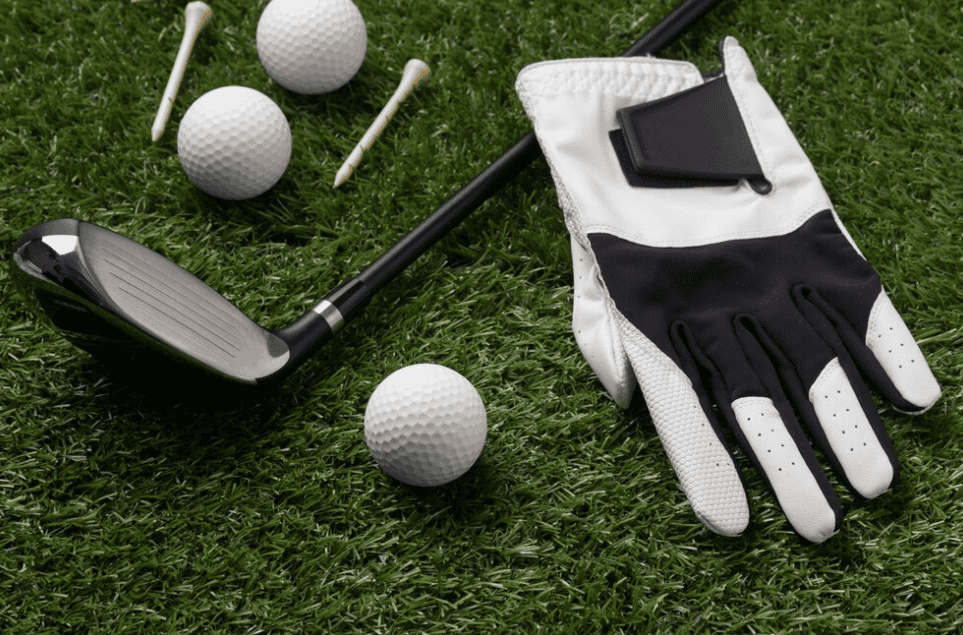
Engineered to seamlessly blend the precision and maneuverability of irons with the power and leniency of woods, the rescue club boasts a design that sets it apart. Its head size falls between that of a wood and an iron, featuring a broad sole and a low center of gravity. The clubface is relatively shallow, allowing for easier connections from various terrains such as dense rough patches and fairway bunkers.
Numbered in alignment with the corresponding irons, such as 3-hybrid mirroring the role of a 3-iron, or a 4-hybrid taking over from a 4-iron, the rescue club’s distinctive construction often empowers golfers to achieve extended distances and heightened precision compared to the irons they replace.
The true strength of the rescue club lies in its versatility, catering to an array of shots ranging from tee-offs and fairway attempts to navigating challenging terrains. Notably, it proves itself valuable for both long and short approaches, in addition to aiding in delicate chips and pitches around the green.
The surge in popularity of the rescue club stems from its ability to bridge the gap between the forgiveness and distance typical of woods, and the precision and control inherent to irons. As a result, golfers have found in it a valuable asset for enhancing their gameplay, simplifying long shots, and establishing a more consistent performance on the course.
The Origin of the Rescue Club Name in Golf
The term “Rescue Club” finds its roots in the practical purpose this golfing equipment serves. These clubs hold a vital role on the course, aiding players in extricating themselves from tough situations, be it amidst dense woods, challenging rough patches, or sand traps.
Crafted with the intent to swiftly guide golfers back to the fairway, the rescue club extends its assistance generously, empowering even novices to approach seemingly insurmountable shots with newfound confidence.
Given the effectiveness and significance of this equipment, its nomenclature as a “rescue club” is both apt and emblematic of its pivotal role in the game of golf.
Which Companies Produce Rescue Golf Clubs?
Rescue clubs are crafted by renowned golf equipment manufacturers, including industry giants like Callaway, TaylorMade, and Titleist. These esteemed brands offer a diverse selection of rescue clubs, tailored to cater to an array of player preferences and profiles.
For instance, individuals with a more vertical swing will find solace in a rescue club with an upright lie angle, while those with a flatter swing will derive advantages from a club with a more level lie angle. The loft options encompass a range from 17 to 25 degrees, accompanied by corresponding lie angles spanning from 58 to 64 degrees. These specifications naturally vary based on the manufacturer’s design.
Distinguishing Rescue Clubs from Irons in Golf
As previously mentioned, rescue clubs are meticulously engineered to amalgamate the attributes of both irons and woods, delivering golfers a multifaceted and forgiving club option. Here, we delineate the principal distinctions between rescue clubs and irons:
- Club Head Shape: The club heads of rescue clubs stand notably larger and more rounded in comparison to irons. This expanded head size contributes to a more sizable sweet spot and an elevated moment of inertia (MOI), resulting in enhanced accuracy and distance in ball striking;
- Clubface: The club face of rescue clubs is slightly tilted, promoting higher ball trajectories. This facet proves especially advantageous when attempting shots from challenging terrains like rough patches or sand traps;
- Shaft Length: The shaft of a rescue club falls intermediary between the lengths of woods and irons. This configuration grants golfers greater command over their swings while still preserving considerable distance;
- Loft: Rescue clubs boast loft angles exceeding those of irons. This heightened loft aids in swiftly elevating the ball into the air, proving invaluable when tackling shots from rough areas or bunkers;
- Forgiveness: The augmented sweet spot and elevated MOI of rescue clubs render them considerably more forgiving than their iron counterparts. This translates to respectable outcomes even when shots are not perfectly centered.
Engineered with a focus on leniency and versatility, rescue clubs find their purpose among golfers grappling with long iron shots and situations where precision takes a back seat to consistency and distance.
Advantages of Incorporating a Rescue Club in Your Golf Game
Diverging from conventional clubs, the rescue golf club distinguishes itself with a strategically positioned low center of gravity, facilitating heightened ball elevation for extended distances. Additionally, the club’s expansive sole minimizes contact with the turf, culminating in more impactful and solid strikes.
The paramount advantage of embracing a rescue golf club resides in its capability to unleash longer, loftier shots from precarious situations. This translates into reaching greens that were hitherto beyond your approach shot range.
Moreover, when faced with challenging scenarios demanding precise yardage or clearing obstacles, the rescue club steps in as a dependable ally to help you achieve those objectives.
Another pivotal benefit inherent to the rescue club pertains to mitigating the odds of mishits. The judiciously positioned low center of gravity effectively curbs mis-hits, while the generous sole design minimizes turf interference. Furthermore, its user-friendly setup and swing dynamics render it accessible to players of diverse skill levels, ensuring seamless utilization.
Optimal Scenarios for Utilizing a Rescue Golf Club

Did you realize that certain situations demand more than the standard iron or wood in your arsenal? This is precisely where rescue clubs shine, offering a forgiving and versatile alternative to traditional long irons. So, when should the thought of employing a rescue club cross your mind?
- Long Approach Shots: When confronted with the need for an extended approach shot to the green, a rescue club can prove invaluable. Its capacity to elevate the ball into the air while ensuring a soft landing on the green becomes particularly advantageous when hazards or rough patches lie ahead;
- Tee Shots: If maintaining consistent accuracy with your driver poses a challenge, introducing a rescue club off the tee can revolutionize your game. While slight sacrifices in distance might occur, the compensation in terms of accuracy and consistency becomes pivotal for maintaining a commendable score;
- Shots From The Rough: Rescue clubs, tailored for forgiveness, outshine long irons in scenarios involving shots from the rough. The expansive sweet spot and elevated moment of inertia (MOI) significantly aid in navigating the rough terrain and reintegrating the ball into play;
- Shots From Fairway Bunkers: A fairway bunker predicament can be tackled adeptly with a rescue club. Its angled club face plays a vital role in swiftly propelling the ball over the bunker’s lip and back into a favorable playing position;
- Chipping and Pitching: The utility of rescue clubs extends to the delicate art of chipping and pitching around the green. The shortened shaft length and heightened loft contribute to precise shot control, facilitating proximity to the hole and ultimately leading to stroke-saving opportunities.
In light of these considerations, it’s crucial not to underestimate the transformative potential of a well-employed rescue club. It might just be the catalyst your game needs to ascend to new heights and yield lower scores on the course.
Techniques for Successfully Using a Rescue Golf Club
Navigating the intricacies of hitting a rescue club might appear daunting, particularly if you’re accustomed to traditional irons or woods. However, armed with the right technique, you can harness the full potential of this adaptable club. Here are some uncomplicated pointers to help you wield a rescue club with assurance:
- Precise Setup: Initiate your approach by centering the ball in your stance, distributing your weight evenly across your feet. Ensure that the clubface is squarely aimed at your target;
- Gentle Swing: Unlike a driver or fairway wood, you needn’t exert excessive force to achieve considerable distance with a rescue club. Focus on executing a controlled, seamless swing while making solid contact with the ball;
- Sweeping Action: When employing a rescue club, aim to sweep the ball off the turf instead of creating a divot as you would with an iron. This translates to connecting just above the ground and making contact around the center or slightly lower region of the clubface;
- Descending Impact: Striking a balance between excessive loft and minimal ground roll is pivotal. To achieve the ideal trajectory, employ a descending blow technique, propelling the ball to ascend high but land with softness;
- Varied Practice: Rescue clubs excel in versatility, catering to an array of shots. Dedicate time to practicing different shots from various lies – the fairway, rough, and even sand traps – to acclimate yourself to the club’s multifaceted capabilities.
Through the integration of these guidelines and consistent practice, you’ll swiftly ascend the learning curve of using a rescue club. Soon, you’ll be proficient in wielding this club to your advantage on the golf course.
Anticipating Ball Trajectories with a Rescue Golf Club
Rescue clubs commonly produce a ball trajectory that rests between the lofty flight of long irons and the flatter trajectory of fairway woods. This characteristic positioning renders them particularly advantageous for golfers wrestling with the task of launching long irons while desiring a higher degree of control than that offered by fairway woods.
When utilizing a rescue club, the trajectory of the ball’s flight can be subject to the influence of multiple variables. These encompass the club’s loft, the angle of attack, your swing speed, and the ball’s placement within your stance. Herein lie overarching insights into the projected ball flight scenarios that emerge when employing a rescue club:
| Ball Flight | Techniques | Advantages |
|---|---|---|
| Higher Ball Flight | Adjust ball position forward in stance or choose a club with more loft | Overcoming obstacles, soft landing on the green |
| Lower Ball Flight | Position ball slightly back in stance or select a club with reduced loft | Maximizing distance, penetrating wind resistance |
| Straight Ball Flight | Employ a squared and controlled swing, leveraging rescue club forgiveness | Minimized impact of slices/hooks, straight trajectory |
It’s essential to note that ball flight outcomes with a rescue club hinge upon your unique swing style and the particular club in play.
How Far Can a Rescue Golf Club Propel the Ball?
The range achieved by a rescue golf club exhibits variability contingent upon numerous factors, encompassing the club’s loft, shaft length, the golfer’s swing speed, and the finesse of their technique. As a general trend, the distance encompassed by a rescue club typically positions itself between that of a long iron and a fairway wood.
A typical rescue club can range in the loft from 16-27 degrees, with higher lofts providing more loft and shorter distances. A 16-degree rescue club, for example, can hit a distance of around 200-220 yards, while a 27-degree rescue club can hit a distance of around 150-170 yards.
Additionally, the distance a Rescue golf club can provide will depend on the swing speed and form of the golfer. Therefore, your results may vary.
If you need more help finding the right Rescue golf club for you and your specific game, contact a knowledgeable PGA professional at your local golf club. They can provide the best advice and ensure that your clubs are fitted to your game for maximum performance.
The Value of Including a Rescue Golf Club in Your Set
Integrating a rescue golf club into your array of golfing equipment can unveil a host of advantages catering to golfers across the proficiency spectrum. Crafted with meticulous attention, a rescue golf club is engineered to deliver amplified command both during tee-off and fairway strikes. This attribute positions it as an optimal selection for adeptly maneuvering through intricate scenarios demanding the conquest of obstacles, water hazards, and diverse challenges. Its versatile application extends seamlessly to tackling demanding landscapes, including the intricacies of deep rough, sand bunkers, and otherwise inaccessible areas of the course.
Typically designed as a hybrid, the rescue club amalgamates the elongated shaft of an iron with the loft and larger head characteristic of woods. This amalgamation equips it to excel in a variety of shots across the course. Moreover, many golfers experience augmented consistency in their outcomes when employing a rescue club, making it a compelling consideration for those seeking performance enhancement.
Beyond its on-course advantages, having a rescue club within your golf bag offers convenience when scouting for a replacement for aging clubs. With the hybrid at your disposal, the need to shuffle between diverse clubs for varying shots is obviated.
Embracing a rescue golf club into your array proves to be a strategic move that can notably enhance your game, fostering versatility and boosting overall performance on the course.

Insights from Seasoned Players on Mastering the Rescue Club
Professional players regard the rescue club as an indispensable asset within their arsenal due to its versatility in navigating challenging scenarios.
One valuable tip shared by these experts is to approach the rescue golf club shot akin to a wood shot. This entails adopting a slightly open stance and executing an assertive swing followed by ample follow-through. Striking the ball should yield a trajectory higher than an iron yet not as lofty as a wood. The objective is for the ball to achieve optimal carry and land softly on the green.
Another astute suggestion revolves around maintaining your hand position ahead of the clubhead upon impact. This technique safeguards against hitting the ball too fat or too thin. When wielding a rescue club, it’s vital to establish a descending impact onto the ball to maximize carry. This necessitates a swing that descends and marginally crosses the intended flight line.
These insights, culled from the seasoned wisdom of experienced players, offer a tantalizing glimpse into the intricate art of skillfully wielding a rescue club. By wholeheartedly embracing and applying these nuanced techniques, you unlock the boundless potential harbored within this club, propelling your performance to new heights on the golf course.
Moreover, while orchestrating a shot with your rescue golf club, a pivotal consideration lies in deciphering the prevailing lie conditions. If confronted with the challenge of a ball nestled on hardpan or ensnared in deep rough, opting for a loftier club and executing a more potent swing is advisable. Contrarily, when faced with a ball lodged in a divot or resting upon softer terrain, selecting a club with lesser loft and adopting a gentler swing rhythm is prudent. This nuanced calibration ensures optimal trajectory control and prevents unwarranted ballooning of the ball’s flight.
how to hit the HYBRID RESCUE UTILITY golf club every time – LIVE GOLF LESSON
Conclusion
The Versatility of rescue clubs makes them a highly valuable inclusion in any golfer’s bag. Their superior forgiveness compared to conventional irons enhances the potential for achieving longer, more accurate, and loftier ball flights as the situation demands. By implementing correct setup and executing a well-calibrated swing, you can extract maximum utility from your rescue club, ultimately translating into improved scores on the course.
Now, why delay? Take the plunge and experience the benefits firsthand!
FAQ
Fairway woods are specialized for longer shots, often taken from the fairway. These clubs feature a shallow face angle, a larger head size, and considerable clubhead volume, contributing to a higher ball launch angle. On the other hand, rescue clubs, also known as hybrid clubs, blend characteristics of long irons and fairway woods. They sport a deeper face angle, a smaller head size, and reduced clubhead volume, making them better suited for challenging situations like rough or tight-lie shots. The ball’s trajectory off the clubface is not as high, and the shorter shaft length aids in control compared to fairway woods.
Rescue clubs are specifically designed to take over the demanding role of long irons like 3-, 4-, and 5-irons. They serve as replacements for shots that are challenging to execute and control. This proves immensely beneficial for golfers who encounter difficulties in achieving accuracy or generating sufficient power with these particular irons.
Rescue clubs generally share a resemblance with other woods, such as drivers or fairway woods. However, their defining feature lies in their markedly curved face, setting them apart from the standard iterations of these clubs. This curvature imparts a higher loft angle to the club, facilitating swift and effortless ball elevation, thus granting enhanced control during play.