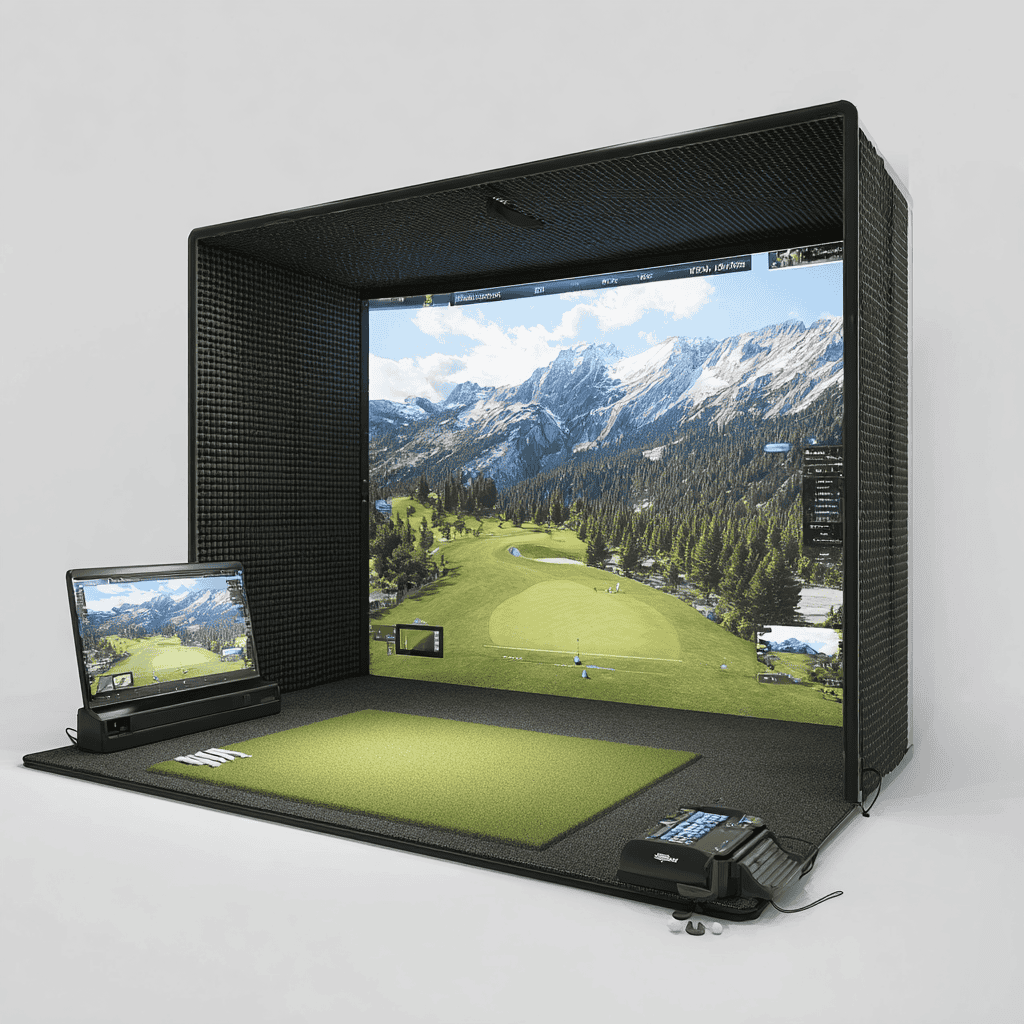
Golf improvement used to depend on two things above all: time on the range and occasional advice from a coach. For many amateurs, that model still works, but it is no longer the only path. In recent years, training technology has changed how recreational players practice, measure progress, and understand their own game. What was once available mainly to professionals and elite academies is now part of the amateur golf landscape. Swing sensors, launch monitors, mobile training apps, and home simulators have made technical feedback more accessible than ever.
This shift matters because amateur golfers often face a specific problem. They want to improve, but they do not always know what is actually happening in the swing. A player may feel that contact is inconsistent, that distance is dropping, or that the ball flight is unreliable, yet feel alone is not always enough to diagnose the issue. Technology does not replace skill, discipline, or coaching, but it gives amateurs something they often lacked in the past: clearer evidence.
One of the most important changes has come from swing sensors. These devices are usually attached to the club, glove, wrist, or body and are designed to capture movement patterns during the swing. For an amateur, their value is not that they make the game easier. Their value is that they turn vague impressions into measurable patterns. Instead of guessing whether tempo is too rushed or whether the club path is unstable, a player can review repeatable data and compare one session to another.
That kind of feedback is especially useful for golfers who practice alone. A coach can spot visible faults, but many amateurs train without regular instruction. In those situations, small motion sensors help bridge the gap between feel and reality. They can show whether a change is actually happening or whether the golfer is only imagining it. This is one reason technology has become so influential in amateur practice. It reduces the distance between intention and observation.
Still, sensors are only part of the story. The broader transformation in golf training has come from launch monitors, which have become one of the most important tools in modern player development. For many amateurs, launch monitors changed practice from simple ball-hitting into more structured feedback. Instead of focusing only on whether a shot looked good, golfers can now see ball speed, carry distance, launch angle, spin, club speed, and dispersion patterns.
This changes how practice is understood. An amateur player may believe a particular club is producing strong results because a few shots looked solid, but launch monitor data often tells a more honest story. Another club may be more consistent. A shorter swing may produce better contact. A lower-effort motion may generate more stable carry numbers. In this sense, training technology often improves not only mechanics but decision-making. It teaches players to separate isolated good shots from sustainable patterns.
That distinction matters because amateur golf is often shaped by inconsistency rather than by lack of talent. Many players can produce one excellent shot. The harder task is repeating something workable. Technology helps by revealing averages, tendencies, and deviations instead of rewarding only the most memorable ball. For practice, that is a major advantage.
Video analysis has also become part of everyday amateur training. This may sound basic compared with sensors and radar-based tools, but its impact should not be underestimated. Slow-motion capture on smartphones has made swing review far more common, and many golfers now combine video with app-based feedback or side-by-side comparisons. For players who never had access to visual analysis in the past, even simple recording can be transformative. It is one thing to feel balanced at the top of the backswing. It is another to see what position the body and club are actually reaching.
Used well, video builds awareness. Used badly, it creates confusion. That is one of the risks of modern golf technology. The more data and visual information amateurs receive, the easier it becomes to chase too many fixes at once. A player who looks at every angle, every number, and every motion checkpoint may become more analytical without becoming more effective. Technology improves training when it creates clarity. It becomes harmful when it overwhelms the practice process.
This is why the best amateur use of technology is often selective rather than obsessive. One player may benefit most from contact and club-path feedback. Another may need better distance gapping. Someone else may need help with start direction or wedge control. The goal is not to collect as much information as possible. The goal is to use the right information at the right stage of development.
This becomes even more relevant with the rise of home simulators. For amateur golfers, home simulation is one of the biggest changes in training culture. It has turned golf practice from something tied strictly to a course, academy, or driving range into something that can happen in a garage, basement, spare room, or private studio. That changes frequency more than anything else. And in golf, frequency matters.
A home simulator does not simply let players hit balls indoors. It creates a more repeatable practice environment. Weather disappears as a limitation. Travel time is reduced. A player can work on wedge distances, driver patterns, approach play, and course simulation without needing a full half-day commitment. This does not make outdoor golf less important, because real turf, wind, lies, and on-course pressure still matter. But it makes training more available, and availability often leads to improvement.
Home simulators are also changing the emotional side of practice. Traditional range sessions can be productive, but they can also become mechanical and aimless. Simulation adds structure and engagement. Golfers can play virtual rounds, test decisions, track improvement over time, and practice with more intention. For many amateurs, that makes training more sustainable. They keep practicing because the experience feels interactive rather than repetitive.
There is also a strong connection between technology and equipment understanding. Amateur golfers today are better positioned to learn how different clubs, shafts, lofts, and ball types actually affect performance. Instead of choosing equipment based only on brand reputation or broad recommendations, players can increasingly test what works for their own swing. This does not eliminate the value of professional fitting, but it does raise the general level of awareness. Training and equipment are no longer separate conversations. Technology has pushed them closer together.
At the same time, it is important to stay realistic. Technology does not automatically create skill. A launch monitor cannot build a repeatable swing on its own. A simulator cannot teach patience. A sensor cannot replace short-game touch, competitive composure, or course management. Amateur golfers still improve through repetition, judgment, and disciplined practice. The tools simply make those efforts more informed.
In some cases, technology may even expose a truth that amateurs do not always enjoy hearing: improvement is often slower than expected. Data makes progress visible, but it also makes inconsistency harder to hide. Yet that is part of its value. Good training is not only about encouragement. It is also about honesty.
What makes this moment so interesting for amateur golf is not one device or one trend. It is the wider shift from intuition-only practice toward feedback-supported practice. Amateurs now have access to tools that help them understand ball flight, motion patterns, training habits, and equipment effects with far greater precision than before. That does not mean every golfer needs a full simulator studio or multiple tracking devices. But it does mean the culture of improvement has changed.
Technology is reshaping amateur training because it makes the invisible parts of the game easier to see. A swing sensor can reveal movement. A launch monitor can explain ball flight. A simulator can make practice more frequent and more structured. Together, these tools are not replacing traditional golf learning. They are extending it.
For the amateur player, that may be the most important change of all. Practice is no longer limited to feel, guesswork, and occasional correction. It can now become more measurable, more flexible, and, in the best cases, more effective.